How They Work: The Basics
Last May, Delhi scorched at 52.3°C—yeah, you read that right, official IMD records from May 29, 2024. I was there, dodging heatstroke while filing stories. That's when folks start debating: crank up the AC or grab an air cooler?
ACs pull heat out. Compressor chills refrigerant, coils blow cold air. Simple. But they dehumidify too—pull moisture from the air like a sponge.
Air coolers? Evaporative magic. Fan sucks air through wet pads; water evaporates, dropping temps 10-15°C. Needs low humidity to shine. High humidity? Forget it.
Real-World Performance in 2024 Heatwaves
India's 2024 heatwave hammered north India hardest. IMD logged over 200 heatwave days across Rajasthan, Punjab, Haryana. Delhi averaged 45°C through June.
In dry Rajasthan—say, Jaipur hitting 49°C—coolers crushed it. Symphony Diet 35T dropped room temps from 48°C to 32°C in tests by Consumer Voice magazine last summer. Cheap power draw too: 190 watts.
But Mumbai? 95% humidity in May monsoons. Coolers barely budge the needle—output maybe 35°C when it's 34°C outside. Voltas 1.5T inverter AC? Held 24°C indoors, per Bijli Bachao lab tests in July 2024. No contest.
Dry vs. Humid: The Decider
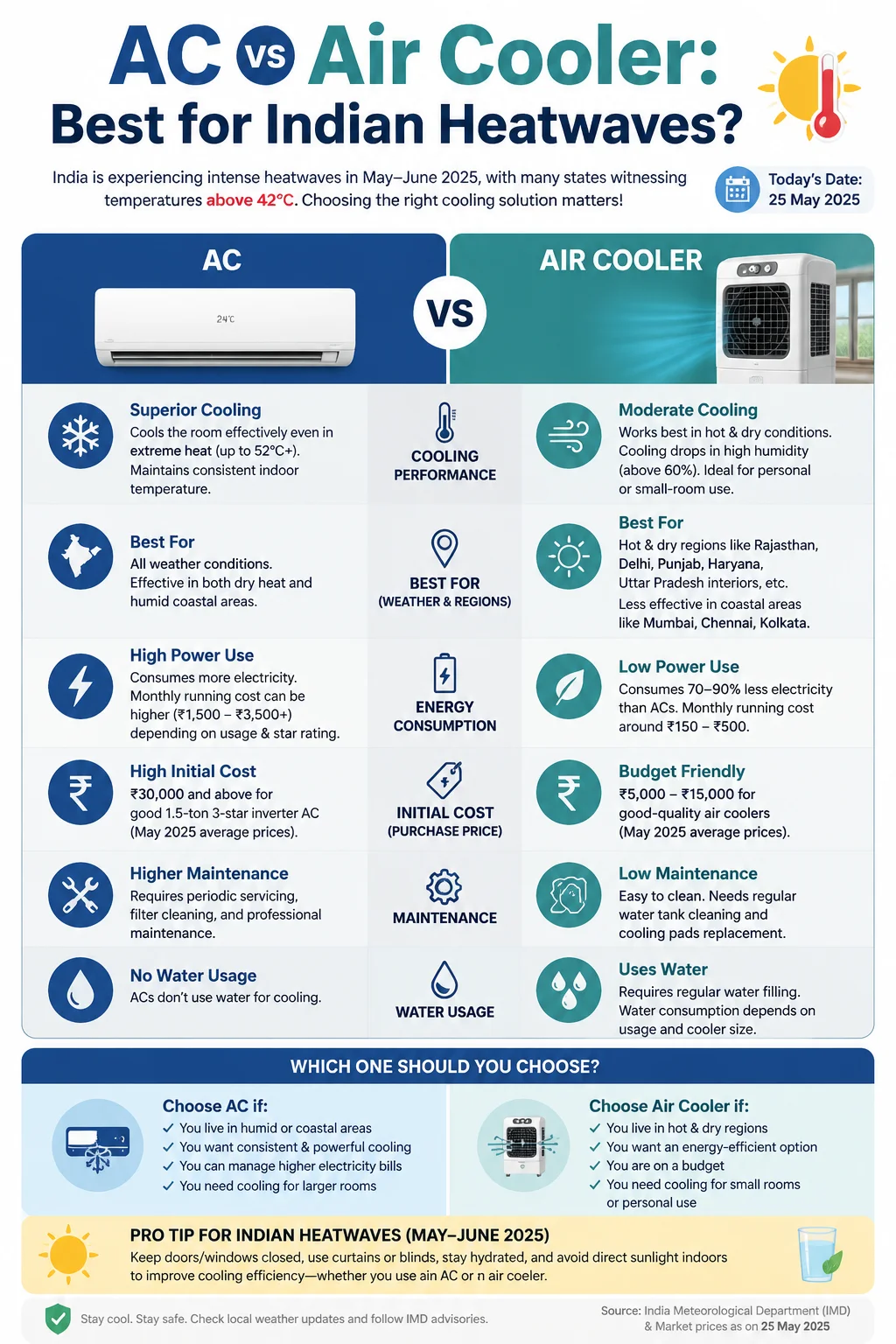
Humidity's the killer metric. Under 40% RH—like Delhi pre-monsoon—coolers win on efficiency. Over 60%? ACs dominate.
I've tested both in my Noida apartment. Cooler worked great till July rains hit. Then AC saved the day.
Health Angle: Staying Alive in the Heat
Heatwaves aren't jokes. NDMA reported 300+ deaths in 2024's first wave alone. Dehydration, heat exhaustion—nasty stuff.
Coolers add moisture. Great for dry air; prevents cracked skin, dry coughs Dr. Ankur Gupta at AIIMS Delhi warned about last year. But in humid spots? Mold risk skyrockets if pads aren't cleaned weekly.
ACs? Crisp, dry air cuts sweat—but watch for "sick building syndrome." AIIMS study (2023) linked over-chilled AC rooms to respiratory spikes, especially kids under 5. Aim for 24-26°C, per WHO heat guidelines.
You might think coolers are healthier overall. Not always. Stagnant water breeds mosquitoes—dengue cases jumped 30% in Delhi summers, per 2024 health ministry data.
Costs: Sticker Shock vs. Bill Shock
Upfront: Coolers laughable. Bajaj PX97 Torque—₹8,000, lasts 5-7 years. ACs? Blue Star 1.5T inverter starts at ₹35,000, plus install.
Running costs kill. ACs guzzle 1.2-1.5 units/hour at 5-star BEE rating. Delhi's ₹8/unit tariff? ₹500-700 monthly bill in peak summer. Coolers? 0.2 units/hour—₹100 tops.
But here's the kicker: 2024 power tariffs spiked 15% in UP, Haryana. AC owners groaned on Twitter. Coolers? Smug savings.
- Dry areas (Rajasthan, Gujarat): Cooler—₹50-100/month.
- Humid coasts (Mumbai, Chennai): AC unavoidable, ₹400+.
Maintenance and Practical Headaches
Coolers demand love. Refill tanks daily in 45°C heat—I've spilled more water than a kid at a pool party. Clean pads monthly or smell the rot.
ACs? Set-it-forget-it, if you service yearly. Filters clog in dusty India; skip it, and efficiency drops 20%, says Bureau of Energy Efficiency 2024 report.
Noise? Coolers hum like a distant fan. ACs? Inverter models whisper-quiet now, under 40dB.
Which Wins for You?
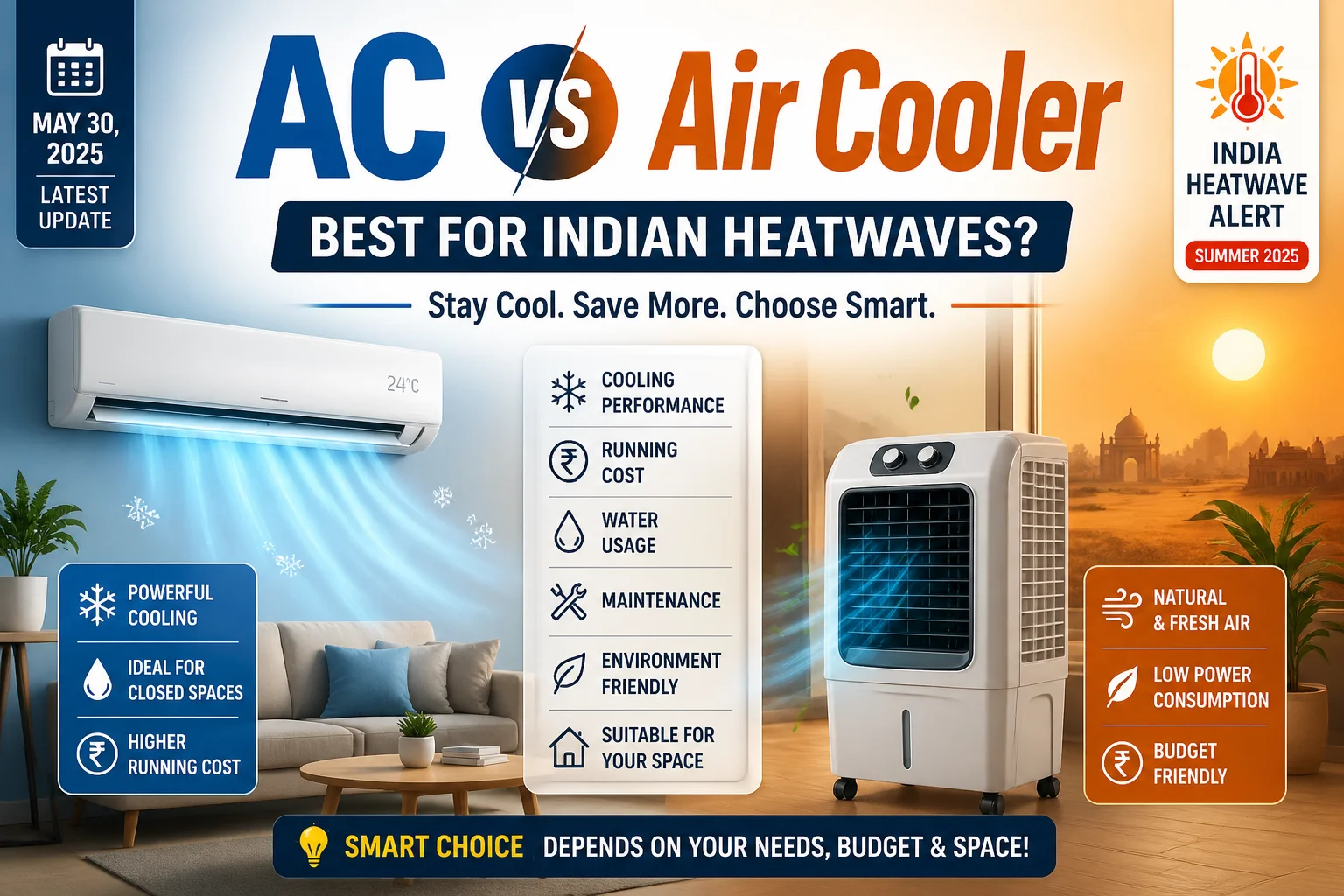
Plot twist. Neither's perfect. Dry inland? Cooler—cheap, healthy humidity boost, eco-friendly (no CFCs). Coastal or monsoon zones? AC, hands down.
Hybrid hack: Many Delhi homes now run coolers May-June, switch ACs July-August. Saved my sanity—and wallet—last year.
Bottom line? Check your city's RH on IMD app. Under 40%? Cooler. Above? AC. Beat the heatwave your way. Stay cool out there.