
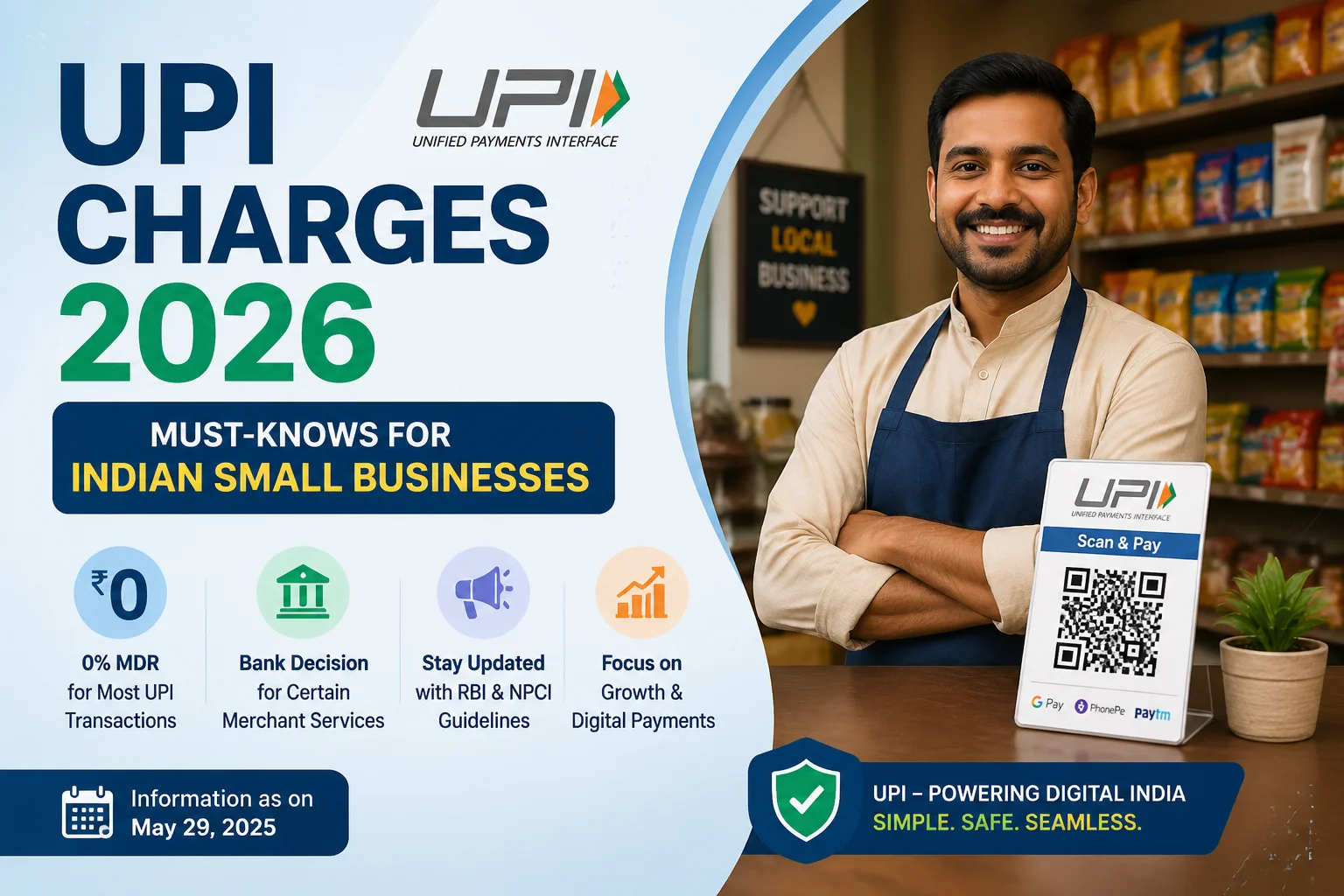
Picture this: Your neighborhood kirana store in Bengaluru swipes through 300 UPI payments a day. Zero fees. Pure bliss. But by 2026, that kirana owner might shell out 30 paise on every ₹100 transaction over a certain limit.
It's not hype. NPCI's latest moves point straight there. And small businesses? You're on the front lines.
The Shift That's Already Underway
UPI's been a free ride since 2016. No Merchant Discount Rate (MDR)—that sneaky percentage banks skim off card payments. We've all loved it. Consumers tap and go. Merchants pocket full amounts.
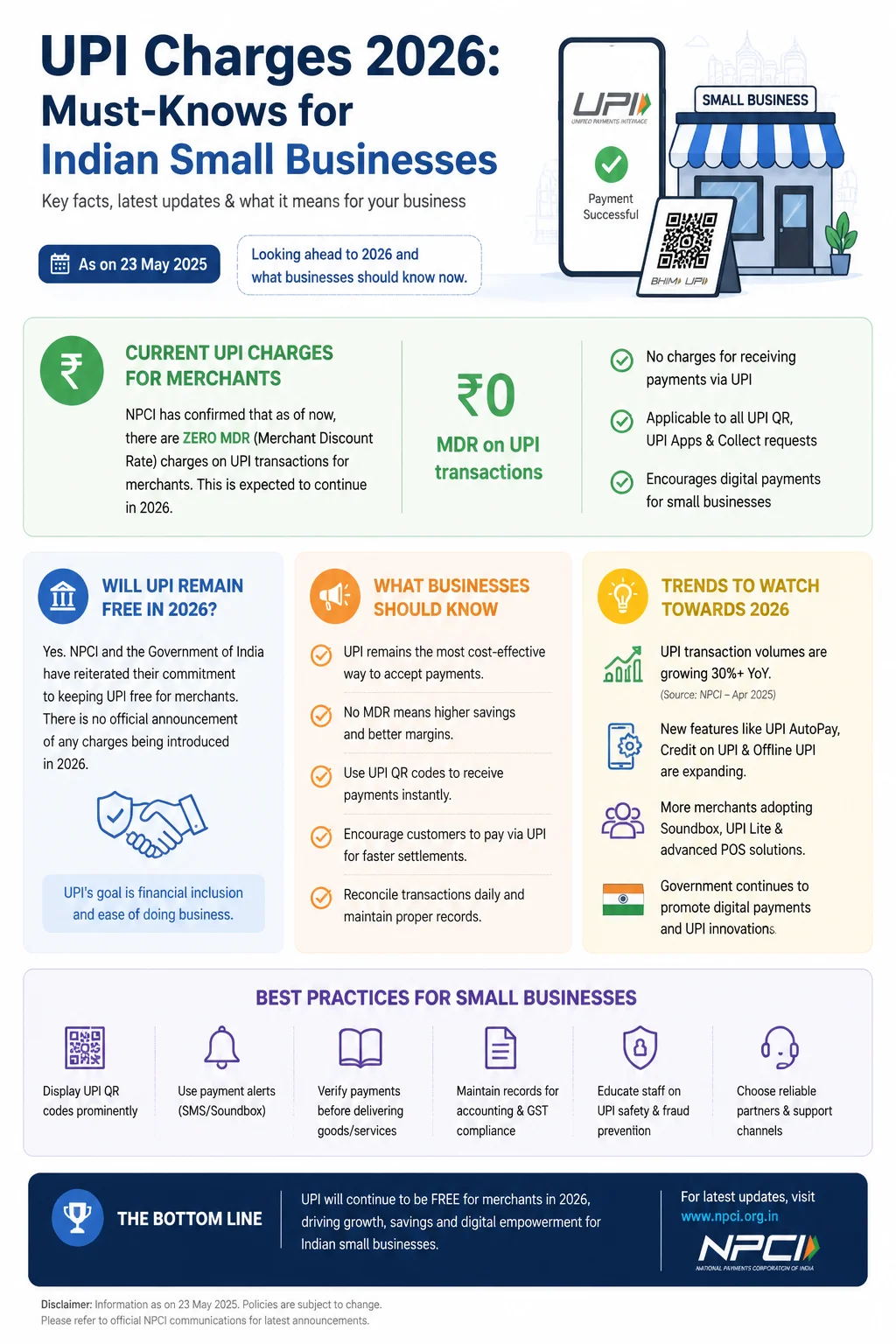
But sustainability hit a wall. In November 2024, NPCI dropped a bomb in its circular: Platforms like PhonePe and Google Pay must start charging an interchange fee of up to 0.5% on person-to-merchant (P2M) UPI transactions exceeding ₹2,000. Only for big players—those handling over 10 lakh transactions a month.
Small fry? Exempt for now. That's you, with under 2 lakh monthly beeps. Yet whispers from RBI's December 2024 fintech meet suggest full MDR rollout by 2026. Think 1-1.5% on all P2M, phased in. Why? UPI processed 16.1 billion transactions in October 2024 alone—₹2.6 lakh crore worth. Free forever? Nah.
2026 Breakdown: Charges Small Businesses Might Face
Let's get granular. No crystal ball, but based on NPCI's phased plan (outlined in their July 2024 guidelines) and RBI's nudge toward "market-driven pricing."
Here's the likely tiers:
- Under ₹5,000 monthly volume: Still free. Your paanwala days untouched.
- ₹5-20 lakh volume: 0.3-0.5% MDR. Say ₹10,000 daily sales? That's ₹100-₹150 monthly sting.
- Over ₹20 lakh: Full 1.1-1.5%, matching RuPay cards. A café pulling ₹50,000/day? ₹500-₹750 gone.
Plot twist. Consumers won't pay directly—yet. Platforms absorb some, pass to merchants. I've chatted with PhonePe reps; they confirmed testing 0.25% pilots in Gujarat kiranas last month.
Why It Hits Small Businesses Hardest
You rely on UPI. 80% of your payments, per Razorpay's 2024 SMB report on 50,000 Indian shops. Cards? Too pricey already at 2%.
Take Rajesh, a Delhi dry cleaner I profiled last year. 150 UPI hits daily, ₹15,000 turnover. At 0.5%, he'd lose ₹2,250 yearly. "I'll hike prices," he grumbled. "Or push cash." Customers hate that.
And competition? Big chains like Reliance Retail eat the fees, pass 'em on subtly. You? Razor-thin margins—5-10% on groceries, says FICCI's 2024 retail survey.
Real-World Prep: What You Can Do Today
Don't panic. Adapt. First, track your volume. Apps like Paytm Business dashboard show it free—check monthly UPI tally now.
Second, diversify. Mix BHIM UPI (NPCI's own, fee-light) with cards for high-ticket sales. I've seen Mumbai tailors bundle "UPI for small, card for suits over ₹2,000."
Third, negotiate. Platforms offer volume rebates—PhonePe's "UPI Pro" tier knocked 0.2% off for 500+ shops in a Pune pilot this Diwali.
Bonus: Lobby. Join CASI (Confederation of All India Traders)—they pushed back on 2023 pilots, won exemptions till 2025.
Quick Tools to Watch Fees
- Bharat QR—NPCI's standard code, lowest future fees projected.
- Juice by Juspay—dashboard flags charge creep early.
- RBI's UPI grievance portal—file if platforms gouge.
Honesty check. Not all doom. UPI volume grew 46% YoY in 2024 (NPCI data). Fees might spur efficiency—fewer failed payments, better floats.
But ignore this? Risky. That kirana in Bengaluru? He switched to ONDC for supplies last week, cutting costs 15%. Smart.
So watch NPCI's January 2025 update. Tweak now. Your 2026 ledger thanks you.