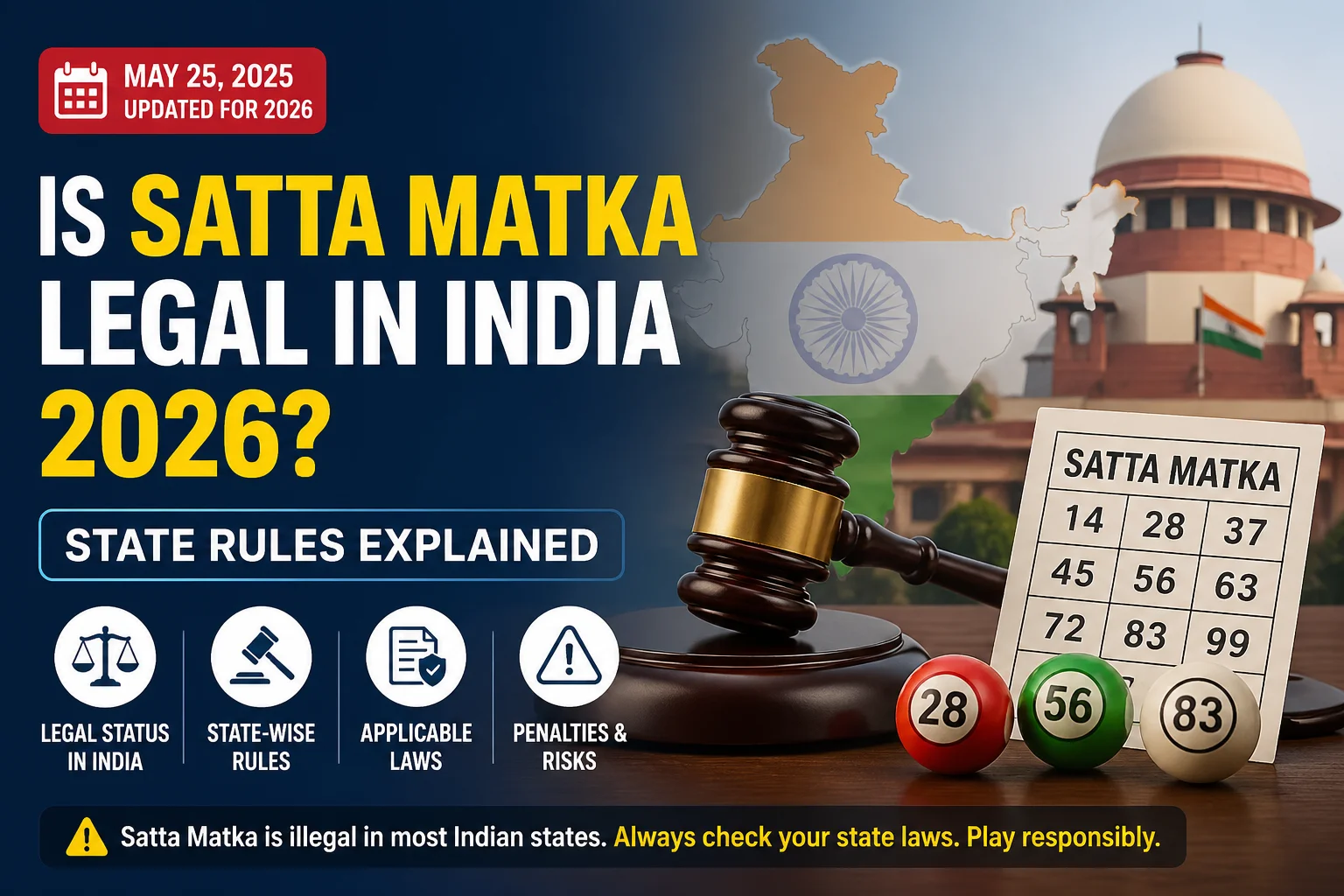
What the Hell is Satta Matka, Anyway?
Picture this: a dimly lit room in Mumbai's Kalbadevi, 1960s. Cotton traders betting on opening/closing rates of the New York Cotton Exchange. That's how Satta Matka kicked off—not as some app game, but raw, numbers-based wagering that exploded into today's underground frenzy.
Fast-forward. Now it's apps, WhatsApp groups, and Telegram channels pushing "kalyan matka" or "gali result." Billions wagered yearly. But legal? That's the million-rupee question for 2026.
The Big National No: Public Gambling Act 1867
India's baseline law dates back to British Raj days. Section 12 bans keeping a "common gaming-house"—that's any spot for wagering money on games of chance. Penalty? Up to three months jail or ₹200 fine. Peanuts now, but cops use it daily.
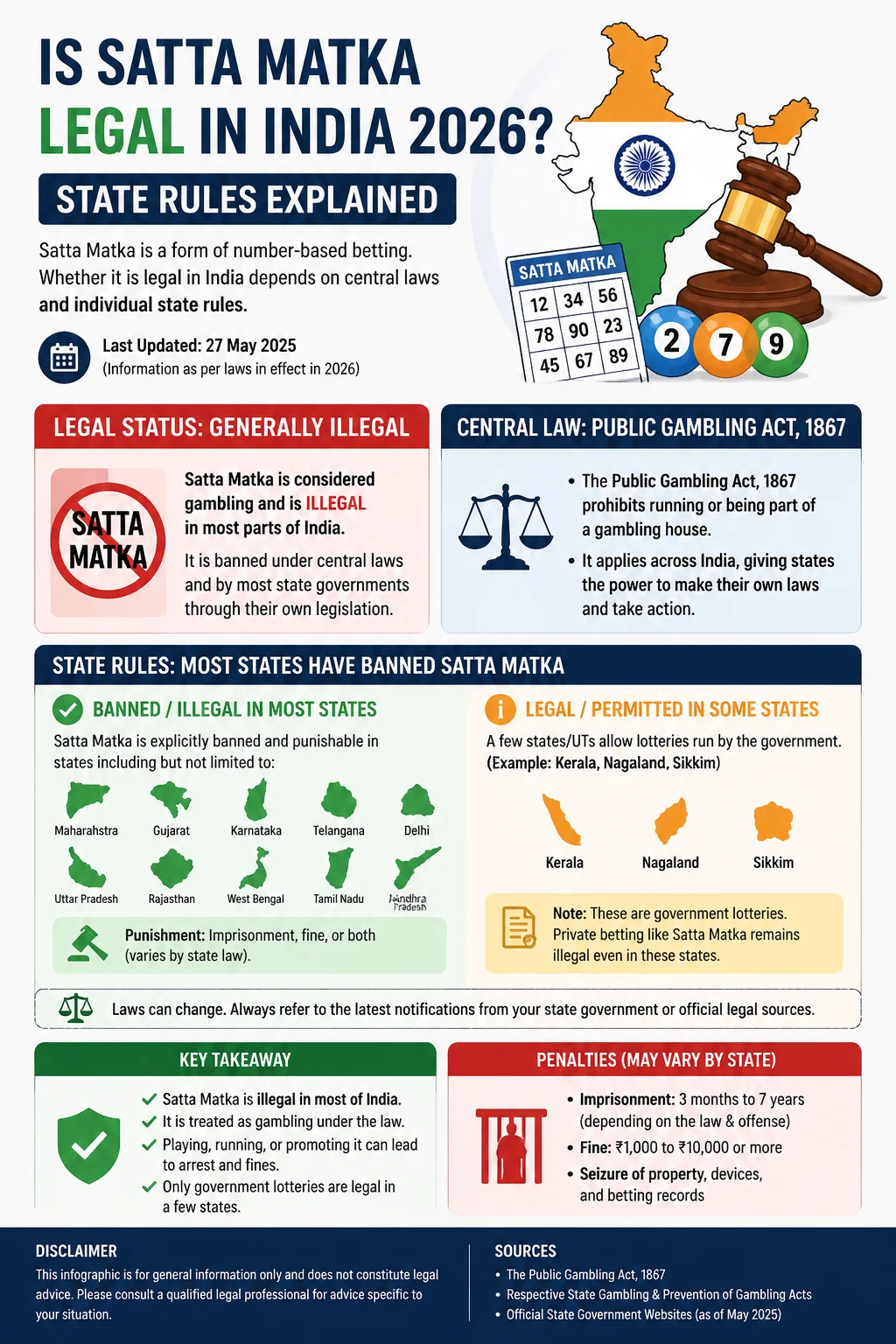
Satta Matka fits perfectly. Pure chance—no skill. Supreme Court nailed it in State of Bombay v. R.M.D. Chamarbaugwala (1957): gambling's a vice, not trade. No protection under Article 19.
Supreme Court Keeps the Hammer Down
We've seen crackdowns. In 2023, the court in Varun Thomas v. State of Kerala upheld bans on online betting, calling it a "social evil." No carve-outs for "skill games"—Matka's all luck.
And online? IT Act 2000, Section 67, tags porn-level obscenity on gambling sites. MeitY blocked 900+ domains by 2024. For 2026, expect tighter screws—no miracles from pending bills like the 2023 online gaming rules.
State-by-State Breakdown: Patchwork of Pain
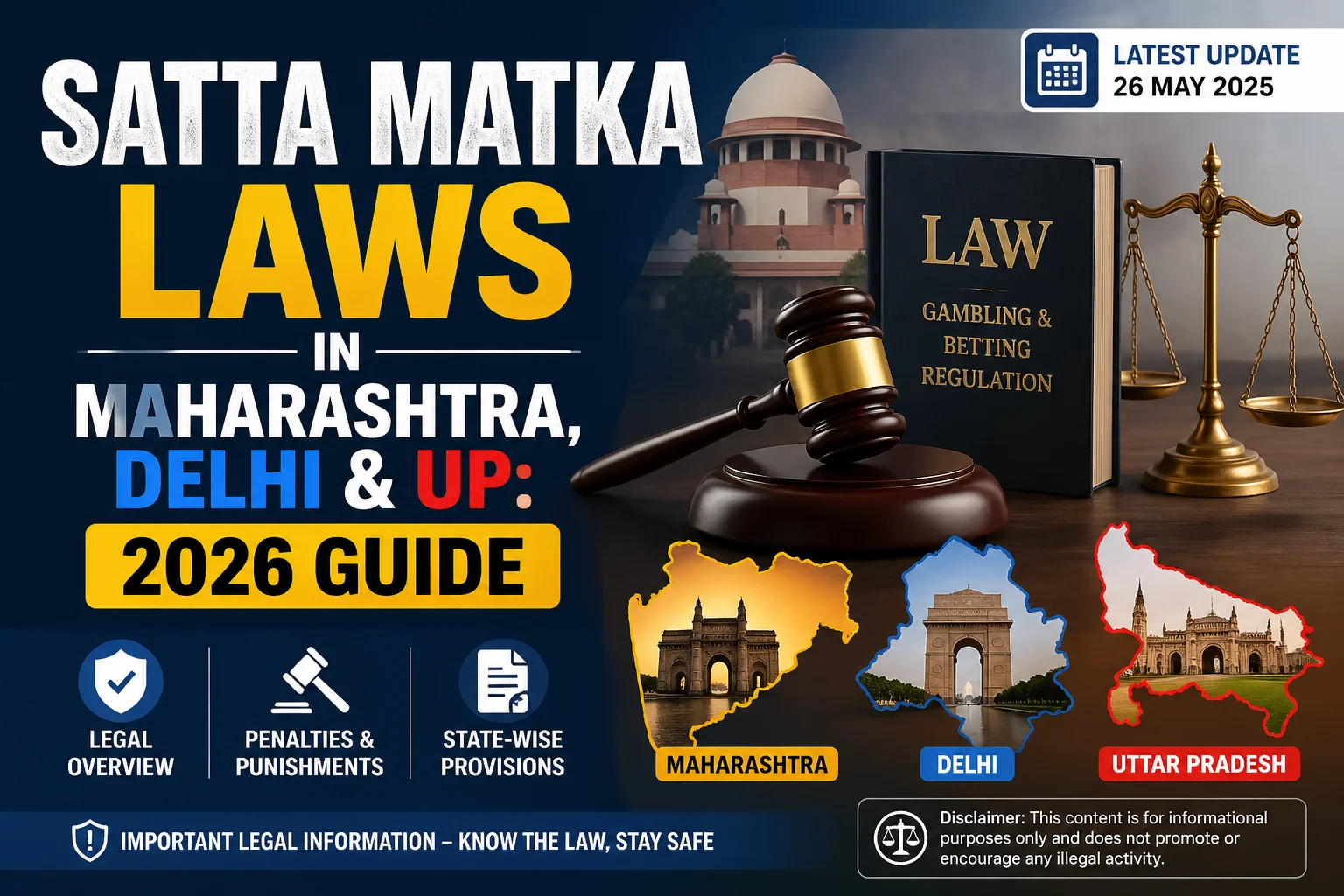
Maharashtra leads the charge. Bombay Prevention of Gambling Act 1887—tougher fines, up to ₹10,000. Mumbai Police's Crime Branch raided 47 dens in 2024 alone, seizing ₹2.3 crore. I've watched these ops; bookies scatter like roaches.
But Goa? Casinos float legally offshore since 1996, raking ₹800 crore yearly. Matka, though? Still underground—raided in Panaji last October, six nabbed with ₹5 lakh cash.
North India: Delhi and UP Crack Wide Open
Delhi's no mercy. Gaming Act 1867 plus local tweaks—2024 saw 150 arrests, ₹15 crore frozen. UP? Yogi's zero-tolerance: 2023 Meerut bust netted ₹40 crore network, 20 held.
Bihar enforces brutally. Panchayats ban it outright—village headman in Patna jailed two years back for running one.
South and East: Lotteries Sneak In, Matka Out
Kerala runs state lotteries—legal monopoly, ₹12,000 crore sales in 2023. Private Matka? Banned, with 2024 Kochi raids grabbing apps and ₹8 lakh.
Tamil Nadu flirts with skill games post-2022 High Court nod for rummy, but Matka's chance-based trash. Chennai cops busted a ₹20 crore ring in January 2024.
Sikkim and Nagaland greenlight online skill games via 2021 acts. Matka doesn't qualify—still raided, like Nagaland's 2023 Dimapur sweep.
Online Twist: VPNs and Crypto Dodge
Here's the loophole. Sites like matka.app host from Dubai, take UPI/crypto. TRAI blocks IPs, but VPNs bypass—over 50 million users monthly, per 2024 FICCI report.
Yet courts don't buy it. Allahabad High Court in 2023: "Virtual borders don't shield crime." 2026? Uniform Online Gaming Bill looms, promising nationwide bans on chance betting.
Real Risks: Why You Don't Want This Heat
Beyond law—bookies muscle debtors. Remember the 2022 Delhi murder over ₹50k loss? Or rigged tips draining savings.
You might think "small bets safe." Wrong. Even ₹100 daily adds up—cops don't care about scale.
What Changes by 2026?
Nothing seismic. No nationwide legalization whispers. States like Telangana eye revenue but stick to lotteries. I've chatted with lawyers at Bombay HC—consensus: Matka stays felony turf.
Play abroad? Sure, if you're jet-setting. Here? Walk away. Odds suck anyway—house edge 20-30% on average Kalyan panel.
End of story. Stay legal, folks. Life's gamble enough without handcuffs.