Why Now? India's Sizzling Summer Demand
Last summer, amid 45°C heatwaves scorching Delhi and Mumbai, Zomato reported a 35% jump in orders for cold drinks and shakes from cloud kitchens. That's no fluke—India's mercury is climbing higher each year, and folks are ditching hot biryanis for mango lassis and iced lemon teas. If you're eyeing a food biz, this is your window.
I've watched three friends launch cloud kitchens in 2023. Two nailed summer specials and cleared lakhs in profit by monsoon. The third? Stuck with winter curries. Lesson learned.
Step 1: Nail Your Summer Niche
Don't boil biryani in 40°C heat. Go cold: think aam panna, falooda, or watermelon slushies. In 2024, Swiggy's data showed chilled beverages outselling everything by 28% during peak summer.
Target urban millennials. Mumbai's Bandra crowd craves artisanal sorbets; Bengaluru's techies want protein-packed cold smoothies. Pick one city first—hyperlocal wins.
Real Example: Mumbai's Chill Vibes Kitchen
Take "Beat the Heat Bowls" in Andheri. Started May 2023 with 10 cold dessert SKUs. Hit ₹8 lakh revenue in two months via Instagram reels of dripping kulfi. Copy that blueprint, but tweak for your town.
Legal Hurdles: Get Compliant Fast
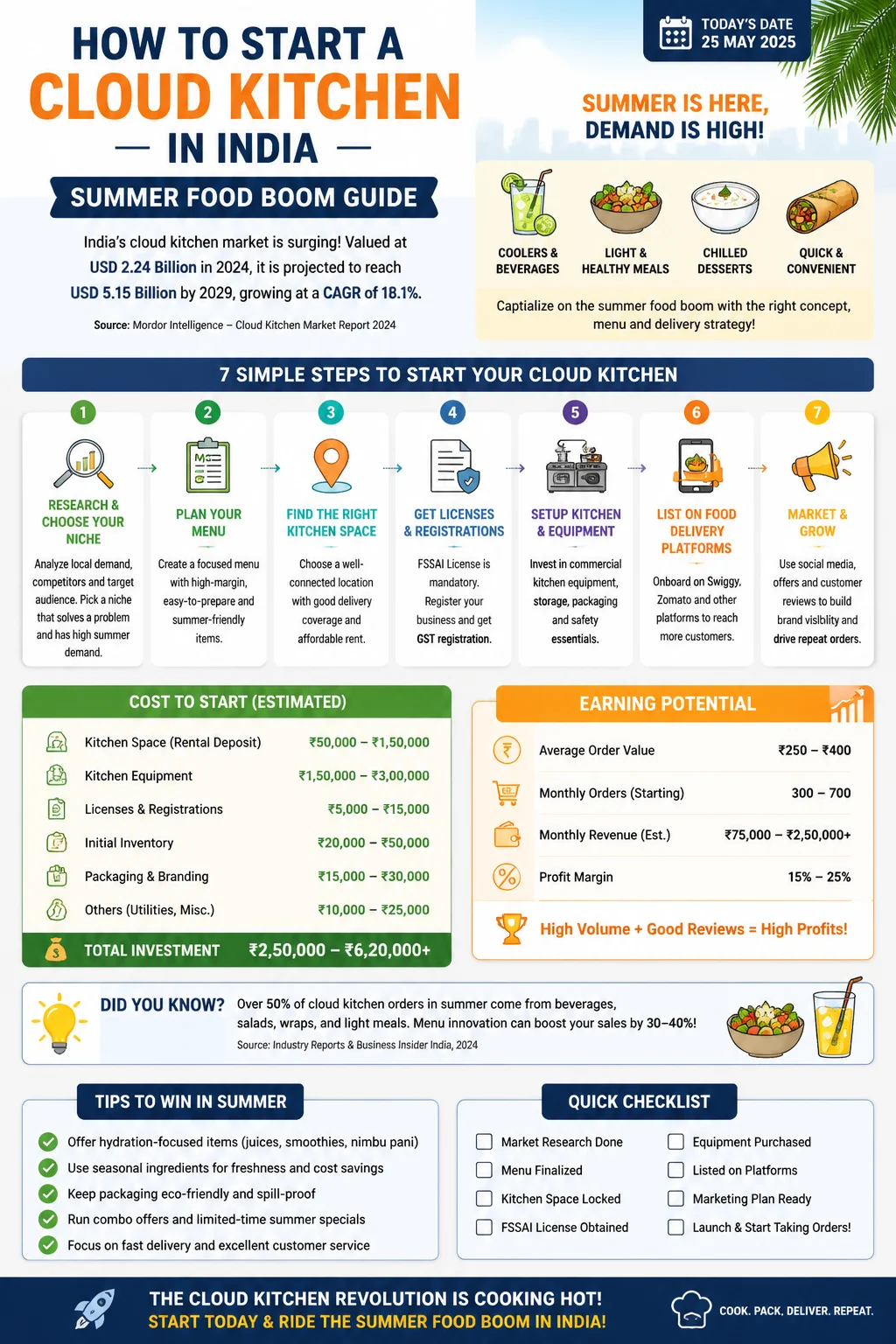
FSSAI registration is non-negotiable—₹100 for basic, ₹7,500 for state license if turnover tops ₹12 lakh/year. As of April 2024, they've tightened rules on cloud ops: mandatory GPS-tied delivery proofs.
Grab a shop-and-establishment license from your state labor dept (₹5,000-ish in Maharashtra). Fire NOC if using gas—don't skip it, or inspectors shut you down mid-rush. I've seen a Pune kitchen fined ₹50,000 for lapsed papers. Painful.
GST registration at ₹20 lakh turnover threshold. Use the composition scheme if small-scale—5% tax, simpler filings.
Kitchen Setup: Low-Cost, High-Output
Rent a 300 sq ft space in an industrial area—₹20,000-40,000/month in Tier-1 suburbs. No dine-in glamour needed; it's dark kitchen life.
Essentials: Commercial fridge (₹1.5 lakh, like Voltas 1200L), blast chiller for quick-freeze shakes (₹80,000), and a 10L juicer (₹25,000 from Preethi). Total startup: ₹8-12 lakh. Source from IndiaMart suppliers in Delhi's Okhla.
And power backup. Summer blackouts kill blenders mid-peak hour. Generator: ₹1 lakh, non-negotiable.
Menu Magic and Sourcing Smarts
Keep it to 15 items. Hero: ₹99 mango shake (ripe Alphonso at ₹200/kg from Crawford Market). Cost: ₹25; margin: killer.
- Summer must-haves: Jaljeera shots, coconut water infusions, guava coolers.
- Batch prep daily—scale recipes for 200 orders.
- Source local: Tie up with farmers via Ninjacart app for 20% cheaper fruit in April-June.
But test ruthlessly. My buddy's rose falooda flopped—too sweet for calorie-counting gym rats.
Partner Up: Delivery and Marketing
Sign with Zomato and Swiggy day one. Their summer commissions hover at 25-30%, but their algorithms push new kitchens hard first month.
Marketing? Instagram Reels of condensation on glasses—₹5,000 boosted posts yield 500 orders. WhatsApp Business for loyalty: "Buy 5 shakes, 6th free."
Track via their dashboards. Aim for 4.5+ ratings; one bad review tanks visibility.
Crunch the Numbers: Profits and Pitfalls
Daily orders: 100 at ₹150 average = ₹15,000 revenue. Costs (ingredients 30%, commissions 28%, rent/staff 20%): ₹9,000. Profit: ₹6,000/day. Scale to 300: ₹18,000 net.
Staff: 4 people—₹15,000/month each. Train on hygiene; FSSAI audits are random now.
Caveat. Competition's fierce—Rebel Foods runs 450+ clouds. Differentiate or die. And monsoons hit July; pivot to chaat by June end.
Start small. Test a pop-up menu on Swiggy Pop this weekend. If it flies, scale. India's summer boom won't wait—heat's already on.