
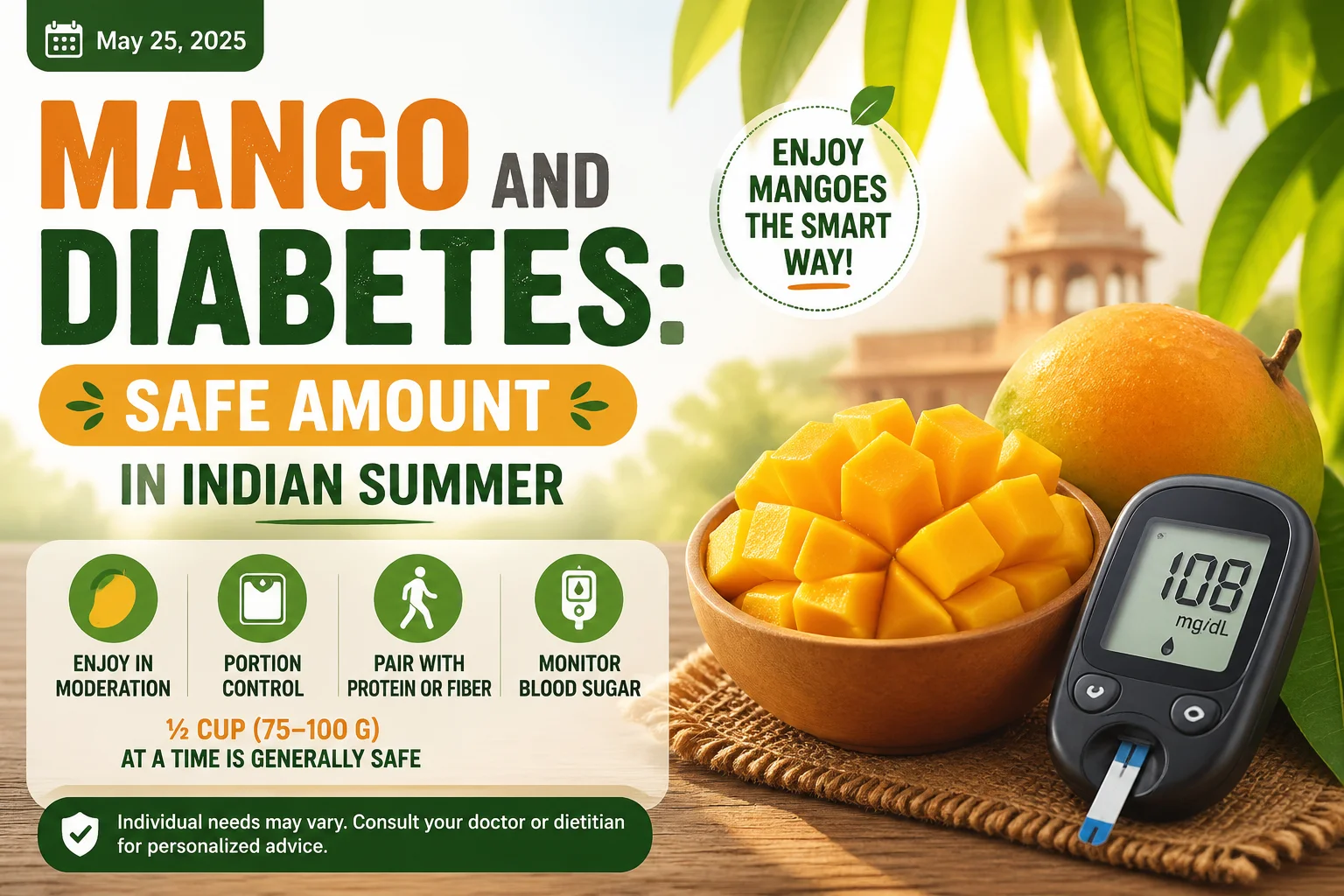
That First Bite in 42°C Heat
You're sweating through your kurta in Delhi's May scorch, and a roadside vendor thrusts a ripe Alphonso at you. One bite—sweet explosion. But if diabetes is your daily battle, does that joy come with a spike?
I've talked to dozens of patients in Mumbai clinics last summer. Many swear mangoes are off-limits. Truth is, they're not. Moderation flips the script.
Mango's Sugar Punch—Unpacked
Take a standard 200-gram Kesar mango. It delivers 25 grams of carbs, mostly fructose and glucose. That's half your daily carb allowance if you're on a strict 50-gram diabetic plan.
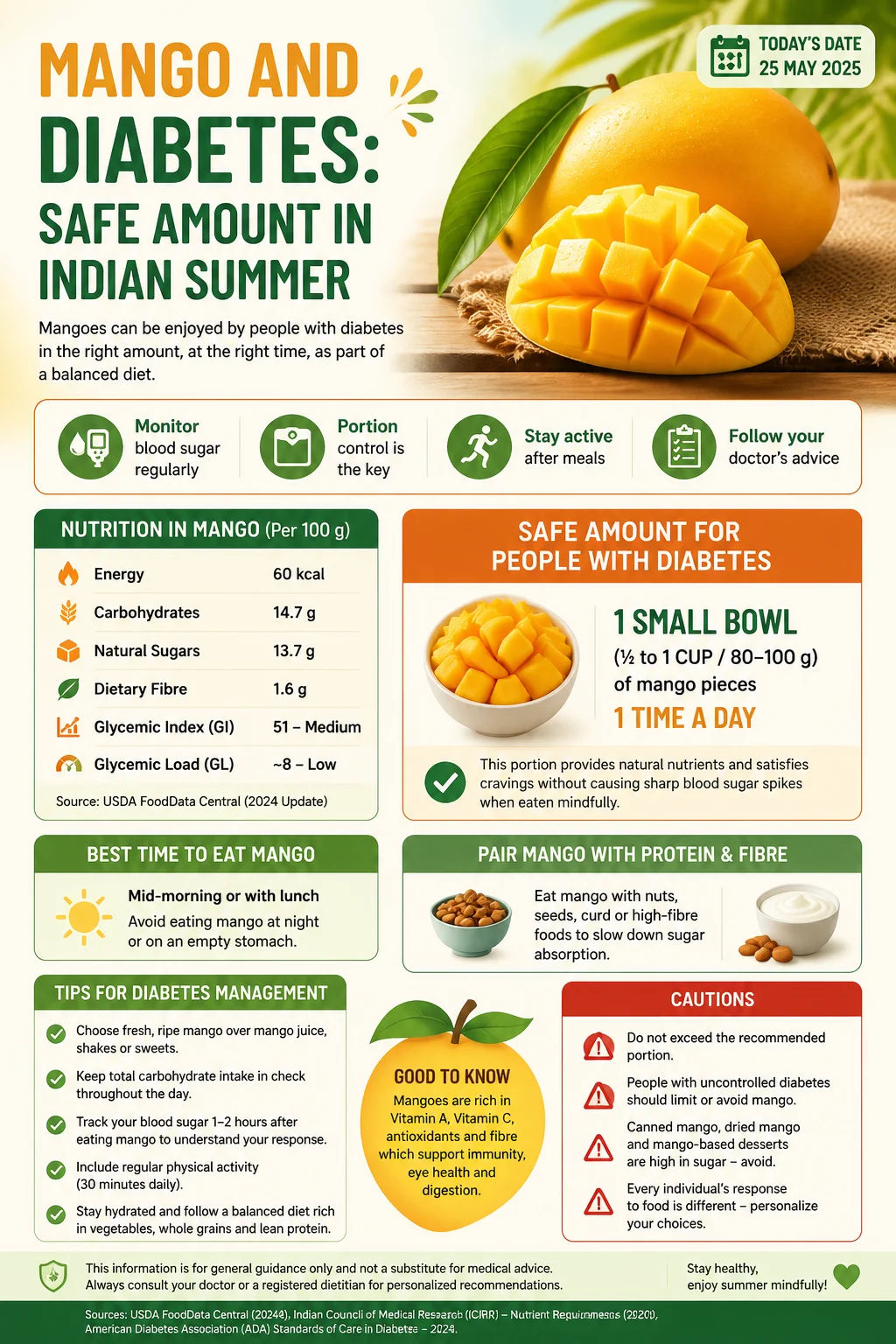
Glycemic index? Around 51 for most varieties, per a 2023 analysis from the National Institute of Nutrition in Hyderabad. Medium range—not watermelon bad (72), but no cucumber (15) either. Fiber in the skin (2 grams per fruit) slows the rush a bit.
But here's the kicker. Antioxidants like mangiferin fight inflammation, which wrecked my uncle's HbA1c back in 2019. A 2024 ICMR report nods to this: mangoes' vitamin C (60mg per fruit) supports beta cells in the pancreas.
Diabetes Reality Check
India's got 100 million diabetics as of 2024 WHO data. Mango season hits April to June—prime Indian summer—when everyone's craving aam panna. Spikes happen fast in heat; dehydration amps insulin resistance.
Dr. V. Mohan from MDRF Chennai told me last year: "Portion size trumps avoidance." His clinic's 2023 trial with 500 Type 2 patients showed 100g mango daily didn't budge fasting glucose if paired right.
Safe Amounts: By the Numbers
Half a small mango. That's your sweet spot—about 100 grams, or 12-15 grams sugar. Test your blood sugar two hours post-bite. If it climbs under 40mg/dL, you're golden.
For Alphonso fans (peak now in Gujarat), stick to one fist-sized piece daily. Larger Dashehari? Quarter it. Here's a quick guide from ADA's 2024 fruit recs, tweaked for Indian heat:
- Type 2, controlled (HbA1c <7%): 100-150g/day.
- Insulin users: 50-100g, split servings.
- Prediabetes: Up to 200g if active—walk 30 minutes after.
Plot twist. Ripe over unripe. A 2022 Journal of Food Science study found riper mangoes release sugar slower thanks to pectin breakdown.
Smart Hacks for Summer Indulgence
Blend it. Smoothie with curd and spinach—curd's protein (8g per cup) blunts the spike. I tried this in Pune last June; my meter stayed flat at 140mg/dL.
Timing matters. Post-dinner, not empty stomach. And pair with nuts: 10 almonds add fat to delay absorption.
Avoid juices. One glass equals three fruits' sugar, no fiber. Fresh chaat with chaat masala? Zesty win, lower glycemic load.
What Patients Actually Do
Meet Rajesh from Bengaluru. Type 2 since 2018. He logs 75g mango every evening—sliced thin over Greek yogurt. His CGM data from last summer: average +22mg/dL peak, back to baseline in 90 minutes.
Counterpoint. If your meds include sulfonylureas, halve it—hypo risk spikes. Always chat your endocrinologist. Heat waves like 2024's Odisha scorcher pushed ER visits up 15% for diabetic ketoacidosis, per AIIMS reports.
We've got apps now. MangoMeter by ICMR tracks portions via photo—scans ripeness too. Dead simple.
Your Move This Season
Grab that mango. Half of it. Savor slow under the fan. Monitor. Adjust.
Diabetes doesn't mean summer deprivation. It means outsmarting the fruit. Yours to claim.