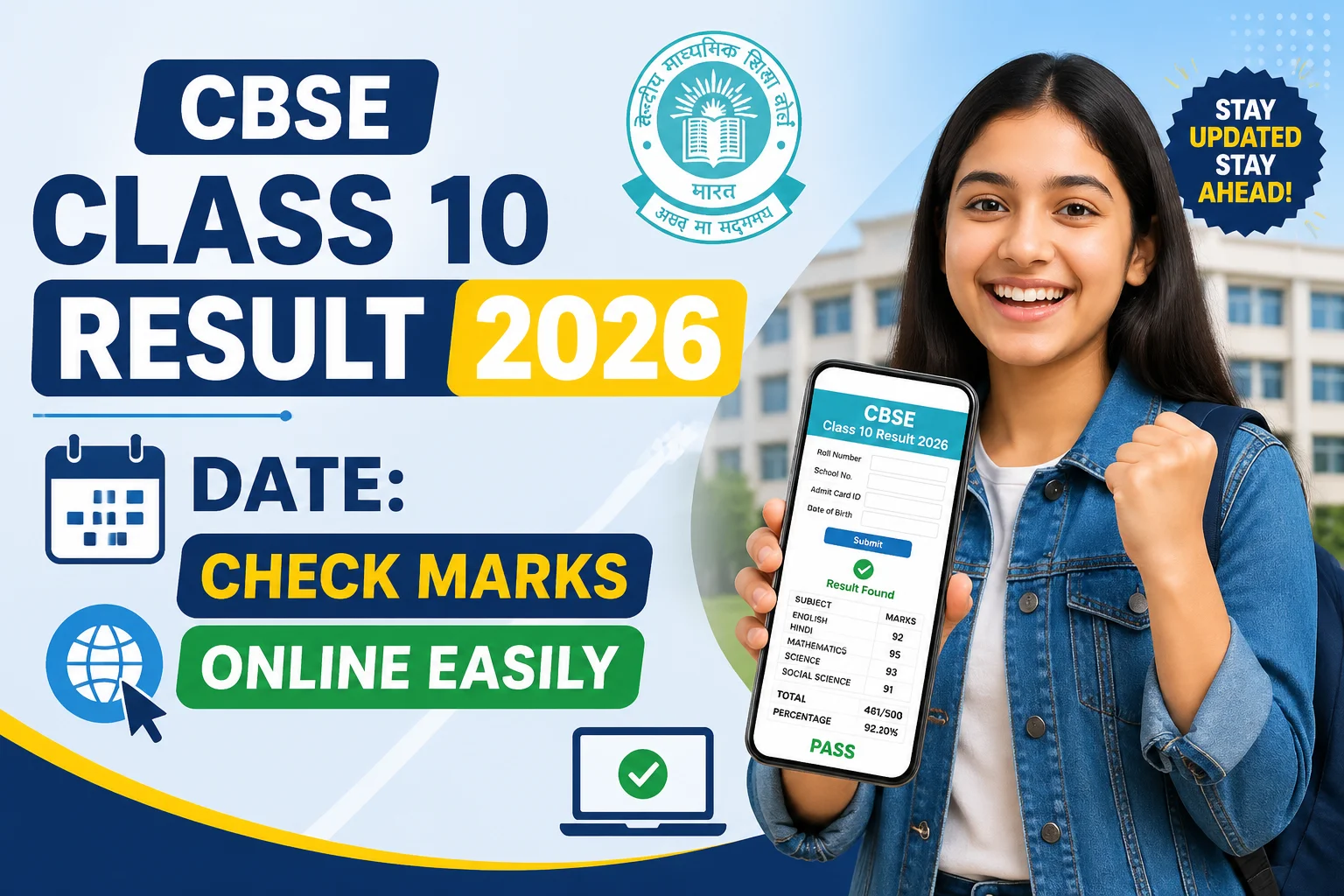
Result day has a funny way of turning even calm households into refresh-button factories. If you're waiting for the CBSE Class 10 Result 2026, here's the short version: CBSE is expected to release it in May 2026, but the exact date will be confirmed only through official CBSE channels.
That last bit matters. Every year, fake result dates fly around WhatsApp groups before breakfast. I've seen parents panic over screenshots with old CBSE logos, made-up circular numbers, and “confirmed” dates that disappear the moment you check cbse.gov.in. Don't fall for that circus.
CBSE Class 10 Result 2026 Date: What We Know So Far
CBSE has not announced the official Class 10 Result 2026 date yet. Based on recent years, the result will most likely come in the second week of May 2026, though CBSE can release it earlier or later depending on evaluation work, moderation, server readiness, and internal approval.
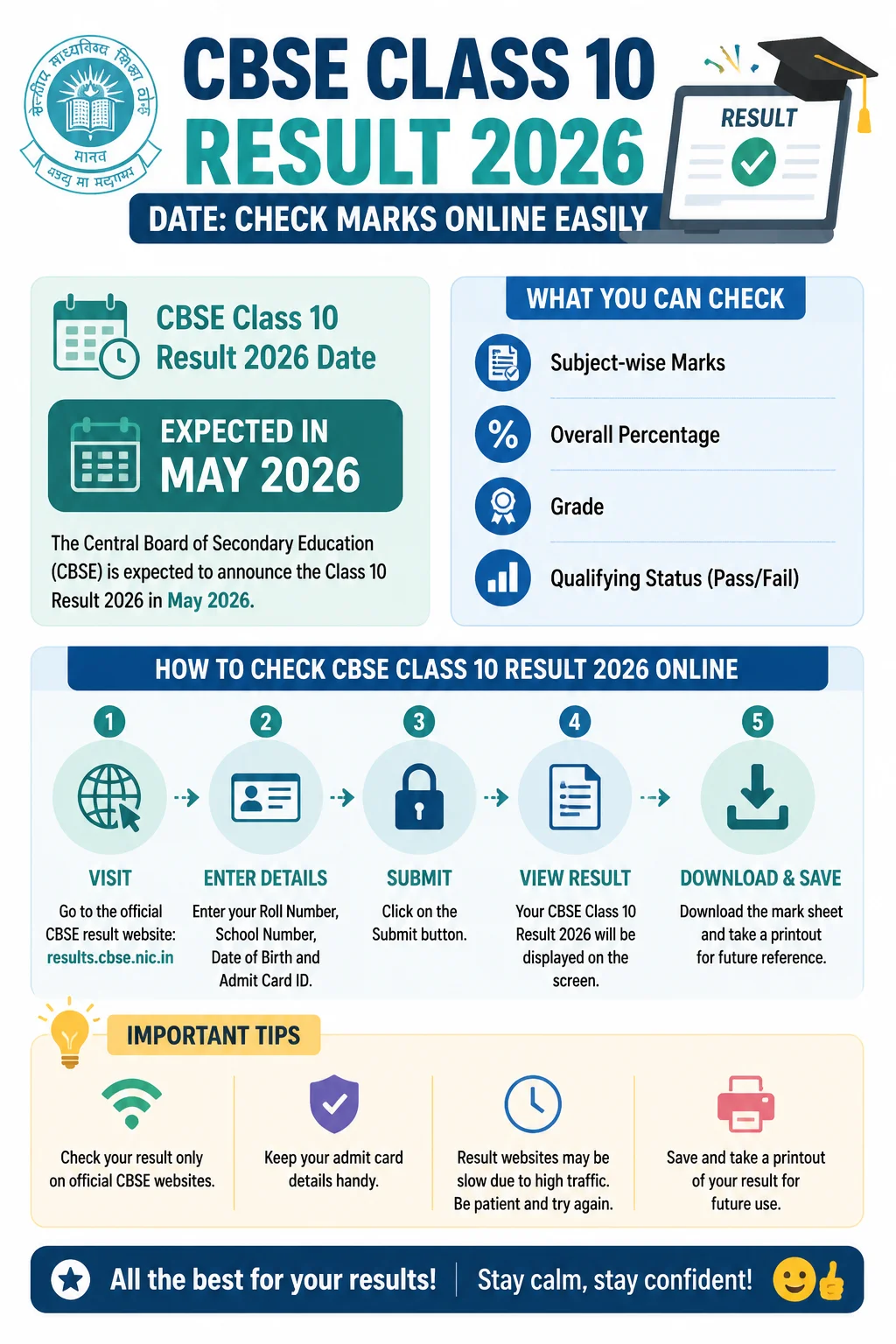
For context, CBSE declared the Class 10 result on May 13 in 2024 and again on May 13 in 2025. In 2023, the result came on May 12. That pattern is why May 2026 is the sensible expectation, not because someone’s cousin’s tuition teacher said so.
The official announcement will appear on CBSE’s website and result portals. The most reliable places to check are:
- cbse.gov.in — CBSE’s main website
- results.cbse.nic.in — official result portal
- cbseresults.nic.in — older but still commonly used CBSE result site
- DigiLocker — for digital marksheets and certificates
- UMANG app — government app that may show CBSE results
How to Check CBSE Class 10 Result 2026 Online
The online process is simple, but result-day traffic can make it feel like you're trying to book Tatkal tickets at 10 a.m. Keep your admit card nearby before the result is declared. Seriously. Don’t start searching for it after the site opens.
Steps to Check on the Official CBSE Result Website
- Go to results.cbse.nic.in or cbseresults.nic.in.
- Click on the link for CBSE Class 10 Result 2026.
- Enter your roll number, school number, date of birth, and admit card ID if asked.
- Click on Submit.
- Your marks will appear on the screen.
- Download or print the result for temporary use.
The online scorecard is useful for admissions and quick reference, but the original marksheet comes through your school later. That’s the one you’ll want to keep safe in a proper folder, not folded inside a math guide from 2023.
Details You’ll Need to Check the Result
CBSE usually asks for information printed on the admit card. The exact fields can vary a little, but students should keep these details ready:
- Roll number
- School number
- Date of birth
- Admit card ID
- Centre number, if required
One small mistake can block the result page. A zero can look like an O. A 1 can look like an I. Tiny things. Big headache.
Checking CBSE Class 10 Result 2026 on DigiLocker
DigiLocker is often the cleaner option once the initial website rush begins. It’s run by the Ministry of Electronics and Information Technology, and CBSE has used it for digital marksheets, passing certificates, and migration certificates in recent years.
To use DigiLocker, students may receive an access PIN through their school. In previous years, CBSE asked schools to download and share DigiLocker security PINs with students. The exact 2026 process will be confirmed closer to the result date.
- Open the DigiLocker app or visit digilocker.gov.in.
- Sign in with your mobile number, Aadhaar-linked account, or school-provided details.
- Go to the Issued Documents section.
- Select Central Board of Secondary Education.
- Choose Class X Marksheet or the relevant certificate.
- Download the document.
DigiLocker documents are digitally signed, which means they’re valid for official use where digital documents are accepted. The verification usually works through secure issuer records and document IDs, not a random PDF floating around in a family group chat. Good system, when people use it properly.
Can You Check the Result on the UMANG App?
Yes, CBSE results are often available through the UMANG app as well. UMANG is a government platform developed by MeitY and NeGD, and it brings several public services into one app.
Open the app, search for CBSE, and look for the Class 10 result service once results are live. If the app slows down, wait a few minutes. Millions of students checking marks at the same time can make even decent systems cough.
What If the CBSE Website Crashes?
It happens. Not every year in the same way, but anyone who has checked board results online knows the drill: blank page, timeout, captcha refusing to load, then suddenly everything works.
If the official result site is slow, try this:
- Use a different official portal, such as results.cbse.nic.in instead of cbseresults.nic.in.
- Switch from mobile data to Wi-Fi, or the other way around.
- Try DigiLocker or UMANG after 15–20 minutes.
- Don’t refresh every two seconds. It often makes things worse.
- Avoid unofficial result websites asking for extra personal details.
And yes, screenshots are fine for sharing with grandparents. For admissions, download the proper result page or DigiLocker document.
What Your CBSE Class 10 Result Will Show
The CBSE Class 10 result usually includes the student’s name, roll number, school details, subject-wise marks, grades, and pass status. CBSE may show marks and grades together, depending on the format used for that year.
CBSE follows a grading system where grades reflect a student’s position in a subject group. For example, A1 is the top grade band. Parents sometimes obsess over one or two marks, but schools generally look at the complete academic record, especially for Class 11 stream allocation.
What to Do After Checking the Result
First, breathe. Then check every detail carefully. Name spelling, roll number, subject marks, pass status — all of it.
If something looks wrong, contact your school instead of trying to argue with the website. Schools coordinate with CBSE for correction requests, marks verification, and official communication. CBSE usually opens separate windows for processes like verification of marks, photocopy of evaluated answer books, and re-evaluation of specific answers.
In past years, CBSE charged separate fees for these services and kept tight deadlines. Miss the window, and that’s usually it. Game over.
Will CBSE Announce Toppers for Class 10 in 2026?
CBSE has avoided publishing official merit lists and toppers in recent years to reduce unhealthy competition. That policy may continue in 2026. Local schools and media may still highlight high scorers, but CBSE itself has generally moved away from turning result day into a national ranking parade.
Honestly, that’s not a bad thing. A 15-year-old doesn’t need the entire internet comparing decimal points on a marksheet.
Quick Safety Tips for Result Day
Result day is also a great day for fake links. Some websites copy the CBSE look, collect roll numbers, and show ads or bogus “early result” buttons. Avoid them.
- Use only official CBSE, DigiLocker, or UMANG platforms.
- Don’t pay anyone to “check result early.” There’s no such legal shortcut.
- Don’t share admit card details publicly on Instagram, X, or Telegram.
- Save a PDF copy of the result in two places: phone and email/cloud storage.
Technology makes result checking faster, but it also makes rumors faster. That’s the trade-off.
Expected Timeline at a Glance
While the final CBSE Class 10 Result 2026 date is still awaited, the practical expectation is May 2026, with the second week looking likely based on the 2023, 2024, and 2025 result pattern. The safest move is to track official CBSE updates and keep your admit card details ready before the announcement.
Use cbse.gov.in, results.cbse.nic.in, cbseresults.nic.in, DigiLocker, or UMANG. If a website promises the result before CBSE releases it, close the tab.
When the result finally appears, check it calmly, download it, and move on to the next step. Class 10 feels huge right now — and yes, it matters — but it’s also one checkpoint in a much longer road. Take the screenshot, call the people who care, maybe eat something sweet. Then plan Class 11 with a clear head.